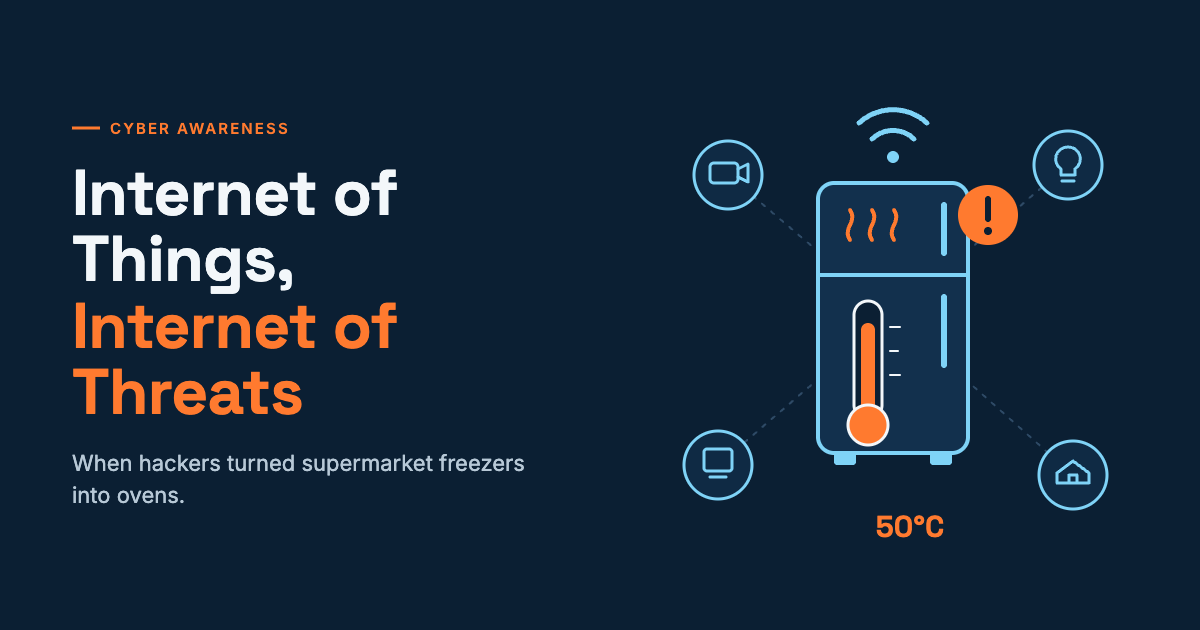
On the night of 11 to 12 October 2026, staff at hundreds of French supermarkets arrived for the morning shift to find their freezers had turned into ovens. No one had broken into the stores. The attackers never touched a single fridge. They simply logged in.
The incident is a vivid reminder of a simple truth that the industry has been repeating for a decade: when we put things on the internet, we also put them within reach of anyone on the internet. The Internet of Things (IoT) is, increasingly, an Internet of Threats.
What happened
Overnight on 11 to 12 October, hackers took control of the systems that run the fridges and freezers at at least 350 supermarkets, including well-known chains such as Carrefour, Intermarché and Monoprix. Temperatures rose to around 50°C for several hours. Huge amounts of food had to be thrown away, some stores had fires, and losses reached tens of millions of euros. One type of attack, but the business impact is critical.
How was it possible. Supermarket fridges are controlled by a central panel that is connected to the internet, so repair technicians can check and adjust them without visiting the store. The hackers used that same online access. They made the freezers run their nightly "defrost" mode for hours instead of minutes, and switched off the alarms so nobody noticed until morning.
The manufacturer of the control panels said many of them were old and had not received the latest security updates. A fix had been available for months. Many stores simply had not installed it. French authorities are still investigating, and no one has claimed responsibility.
Why this matters to everyone
This is not really a story about freezers. It is about how many things around us are now online. There are an estimated 21 billion connected devices in the world today, and that number is expected to pass 39 billion by 2030.
Think of each connected device as a door to your house. One door is easy to watch. But today we also have doors for the security camera, the smart TV, the doorbell, the car, the office air conditioning and the store freezer. Every new door is one more place a burglar can try. Security experts call this a growing attack surface.
And the damage is no longer limited to stolen data. When a connected physical object is hacked, the harm shows up in the real world: spoiled food, fires, unlocked doors or a car that won't respond.
Connected, but careful
Connecting things to the internet brings real benefits: lower energy bills, faster repairs and smarter services. But every new connection is also a new way in, and many of those devices will stay in our homes, offices and stores for years without anyone checking on them. The French supermarkets did not think of their freezers as a security risk, until the morning they did.
As more of our world goes online, the question is no longer whether our things can be hacked. It is whether we aware of the risks that follows after we decided to make things easier by connecting everything to internet and unknowingly opening more doors for cyber criminal to come.
Sources
- Investigators hunt French supermarket fridge hackers, Reuters via Business Insurance, 13 Oct 2026
- Hundreds of supermarkets in France hit by 'unprecedented' cyberattack, Al Jazeera, 13 Oct 2026
- Hackers heat supermarket freezers across France, Reuters via The Telegraph India
- Stores across France lose millions after hackers turn fridges into 'ovens', EWN, 13 Oct 2026
- Internet of Things (IoT) Statistics (2026), Review42 citing IoT Analytics